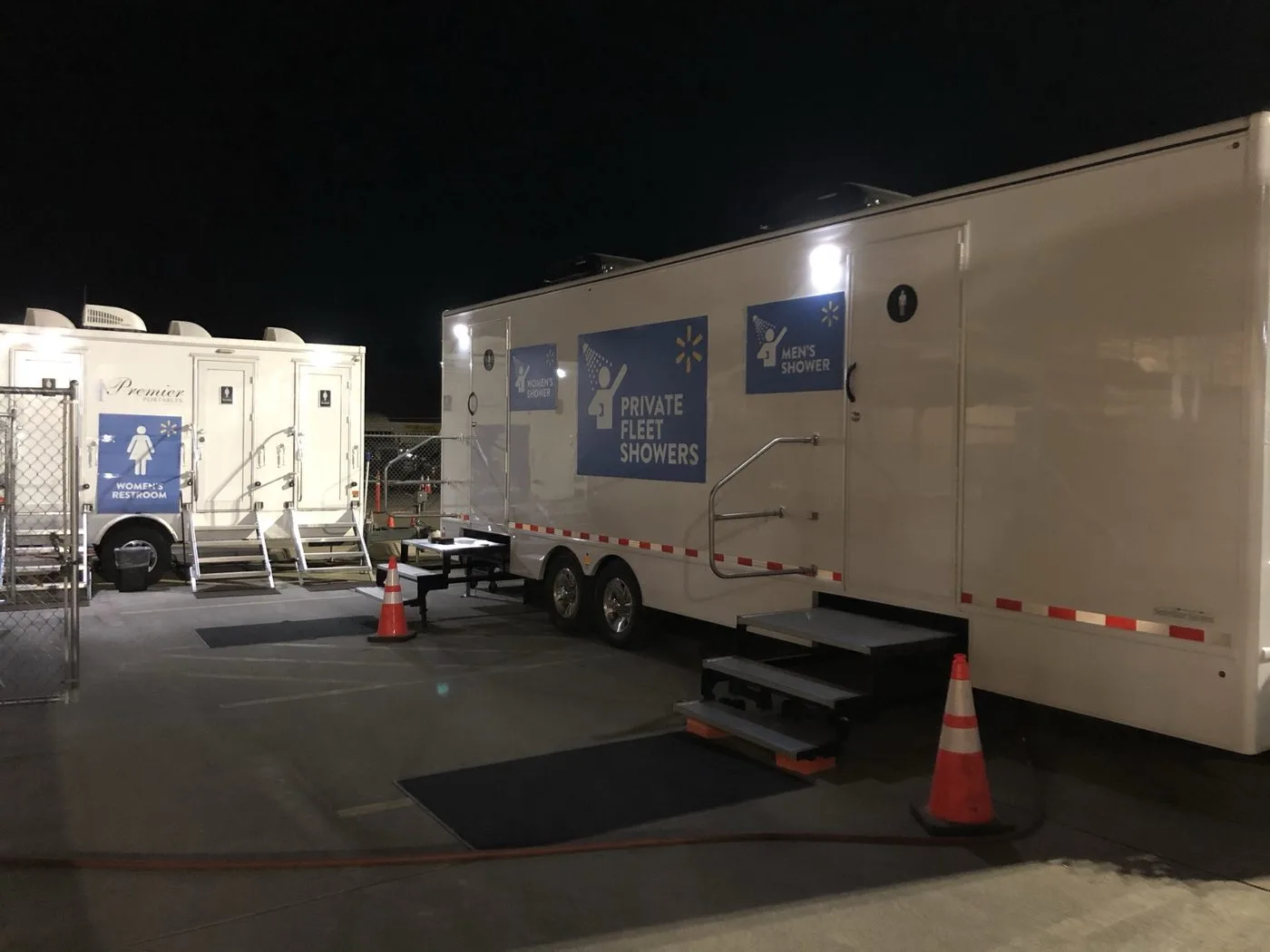
The call came in late 2020. A major distribution center in Northern California was undergoing a significant expansion — adding on while the facility remained fully operational, running three shifts, 24 hours a day, seven days a week. That detail matters: these trailers weren't just serving a construction crew. They were serving an around-the-clock active workforce throughout the entire project, with construction workers added on top. The initial ask was an 8-station shower trailer, an 8-station restroom trailer, and a 3-station restroom trailer.
What followed was anything but simple. As the project scaled, so did the need. Over the course of 18 months, the deployment grew to eight trailers running simultaneously on site:
Meeting that demand required sourcing additional units beyond our own fleet. Some trailers were sub-rented from trusted partners in our network — a capability that matters when a client's needs outgrow any single provider's inventory. Every trailer that went on that site met our standards regardless of who owned it. The shower trailer served the facility's truck drivers — long-haul drivers who needed clean, private showers between runs. Not an afterthought. A daily-use facility for working people.
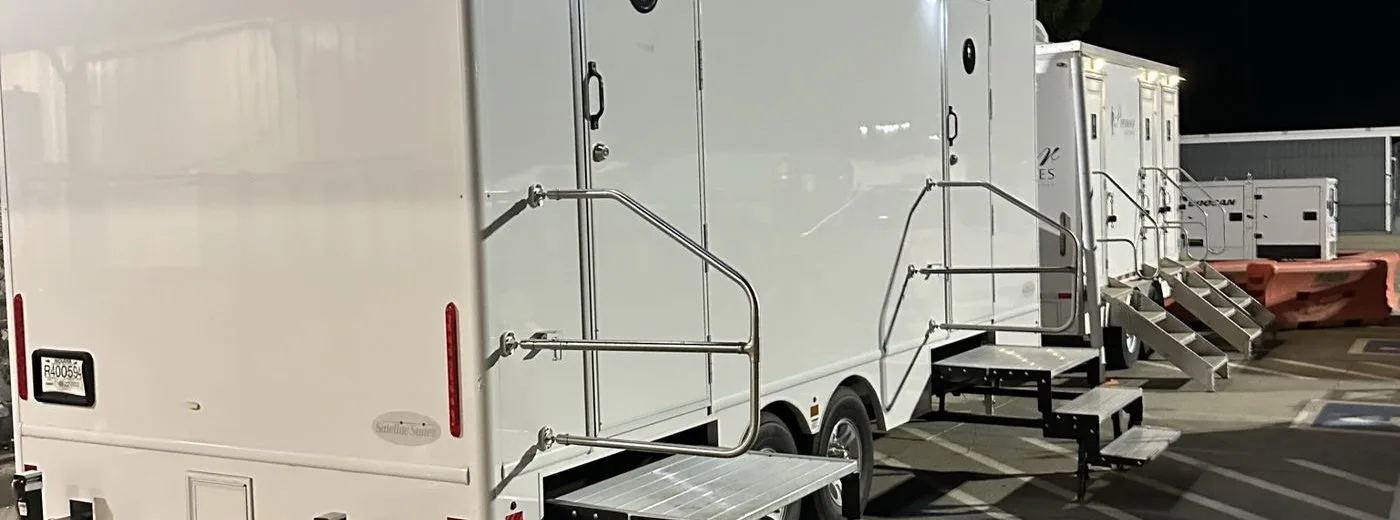
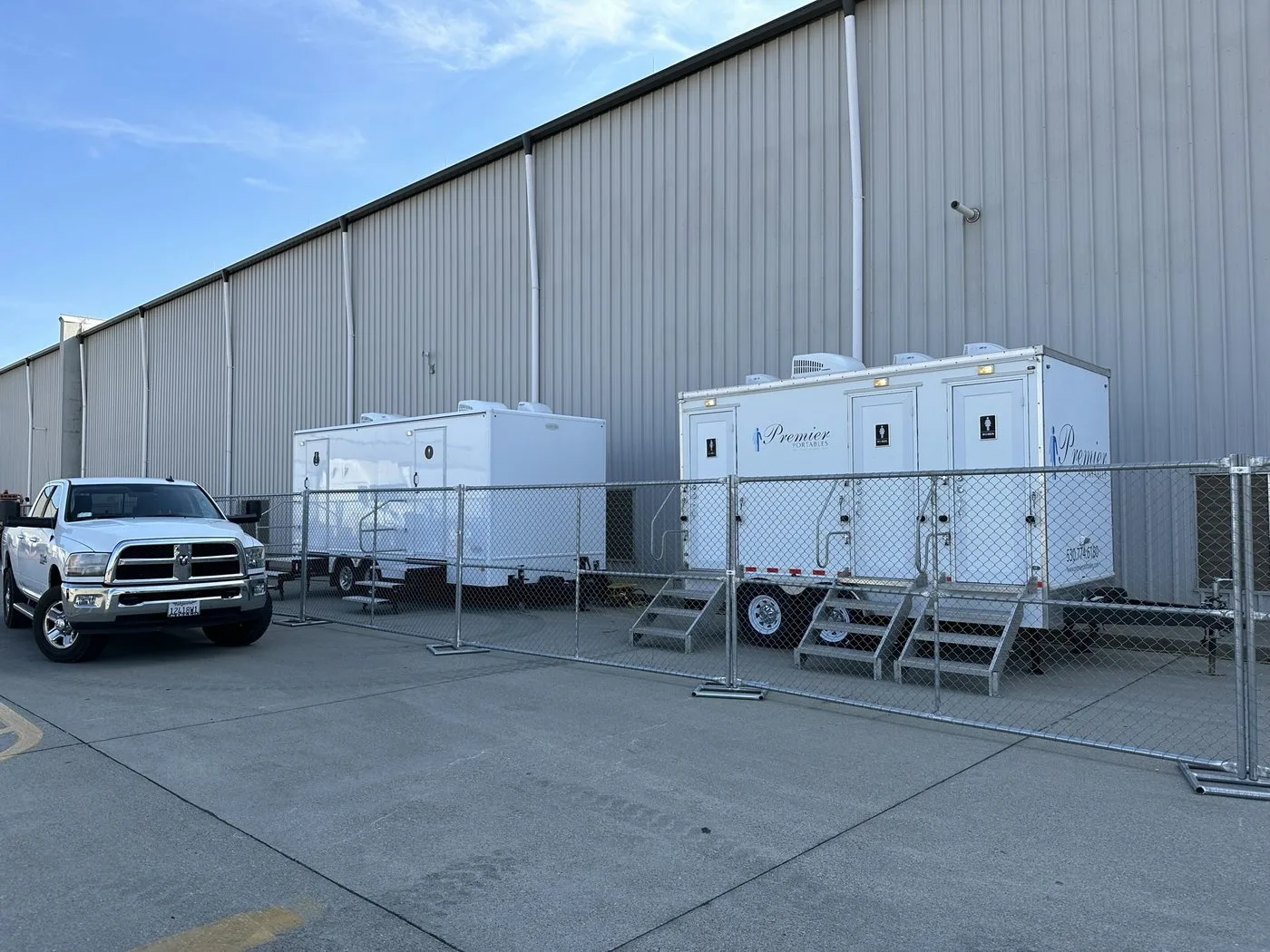
The site presented varied utility conditions across the footprint. Some trailers were connected directly to shore power; others ran off generators. Some tied into the facility's water supply; others operated from onboard freshwater tanks that required regular refilling. Every trailer was pumped daily. Managing eight units across mixed utility configurations — simultaneously, on a site running three shifts around the clock — required coordination and reliability that couldn't slip.
It never did.
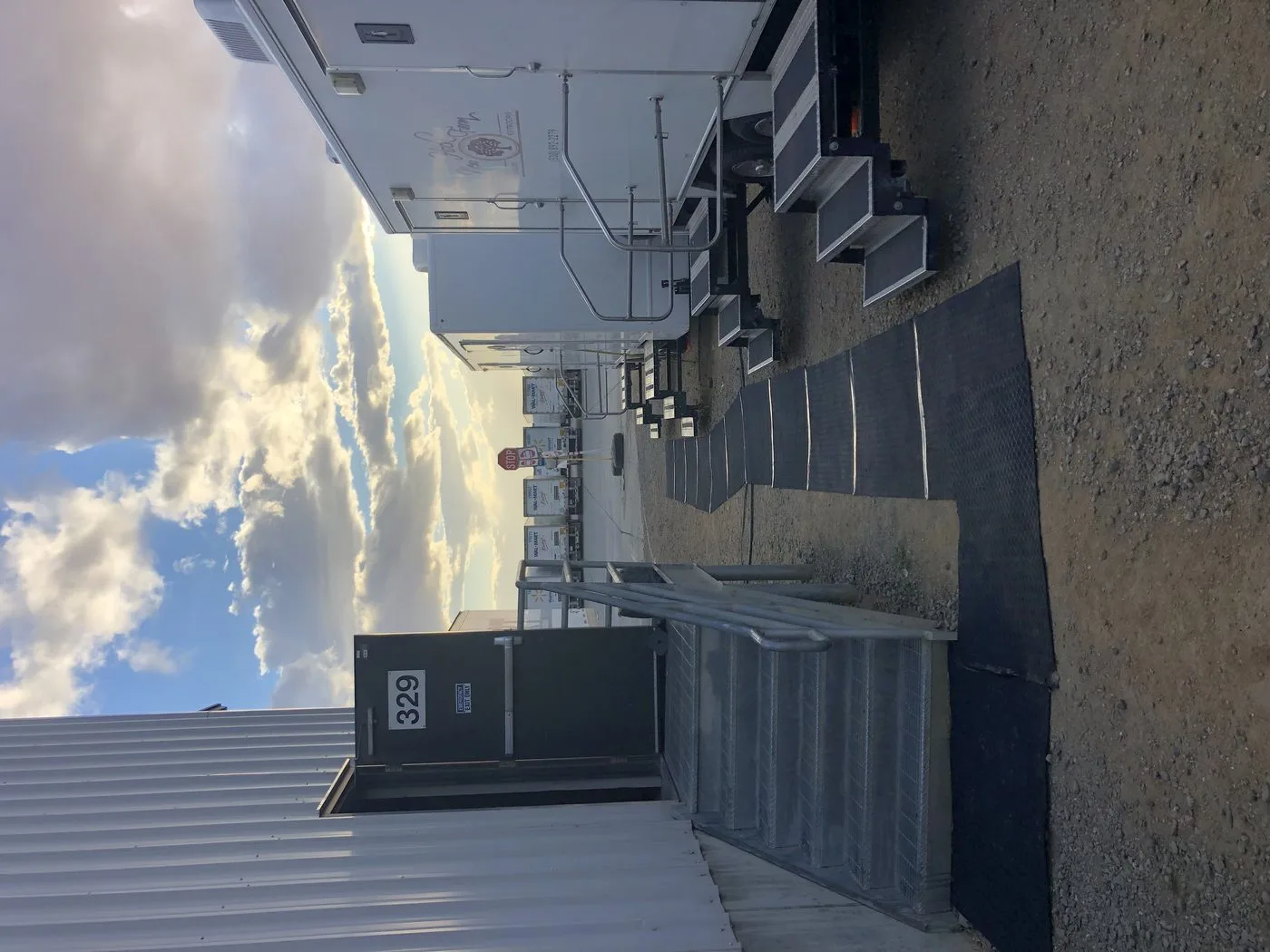
After Phase 1 concluded, another call came in. Two trailers this time — an 8-station and a 3-station — for a 3-month project. The facility was still running. The workforce still needed reliable facilities every single day. And this phase was different in one critical way: we were responsible for everything.
Not just delivery and setup. Every single day for 90 days, we:
That's 90 consecutive days of on-site service. No days off. No missed visits. When you tell a client you'll be there every day, you show up every day — including weekends, including the days when it would have been easier not to.
We didn't miss a single one.
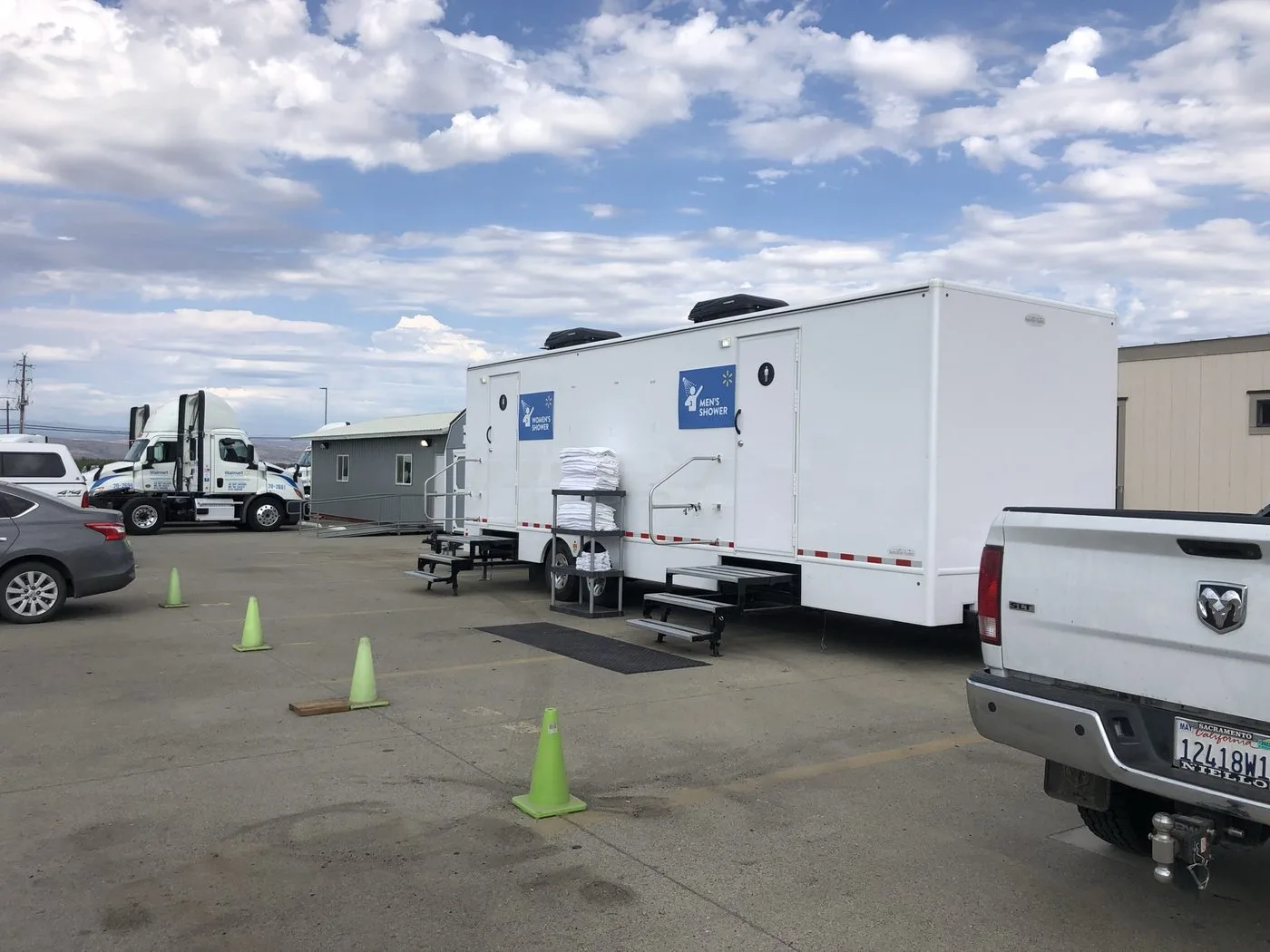
The relationship didn't end with the construction phases. A third need emerged — and this one was permanent.
Walmart's Fleet Development Program gives distribution center associates a path to earn their commercial driver's license and join Walmart's Private Fleet of over 13,000 drivers. It's one of the most significant workforce development programs in American retail — and it requires a dedicated training facility. This location leased land adjacent to the distribution center to run their CDL training operation.
That facility needed restrooms. Not temporary ones.
Most restroom trailers use RV-style toilets that deposit waste into a large holding tank underneath — they're designed to be pumped out and moved. This unit is purpose-built for permanent installation. It has standard flush toilets and no holding tank, engineered from the ground up to drain directly into a septic system. That's not a workaround — it's the right tool for a permanent application.
We placed the unit on the leased lot, plumbed it directly into the existing on-site septic system, and connected it to permanent power and water. The installation required hiring a crane to position and level it precisely — the only practical way to place a unit designed never to move. A custom access ramp was built to code on site.
That trailer has been in place for over three years, serving the instructors, trainees, and staff of Walmart's CDL training program every single day. The client handles daily cleaning and stocking. We handle everything else.
It's still there today.
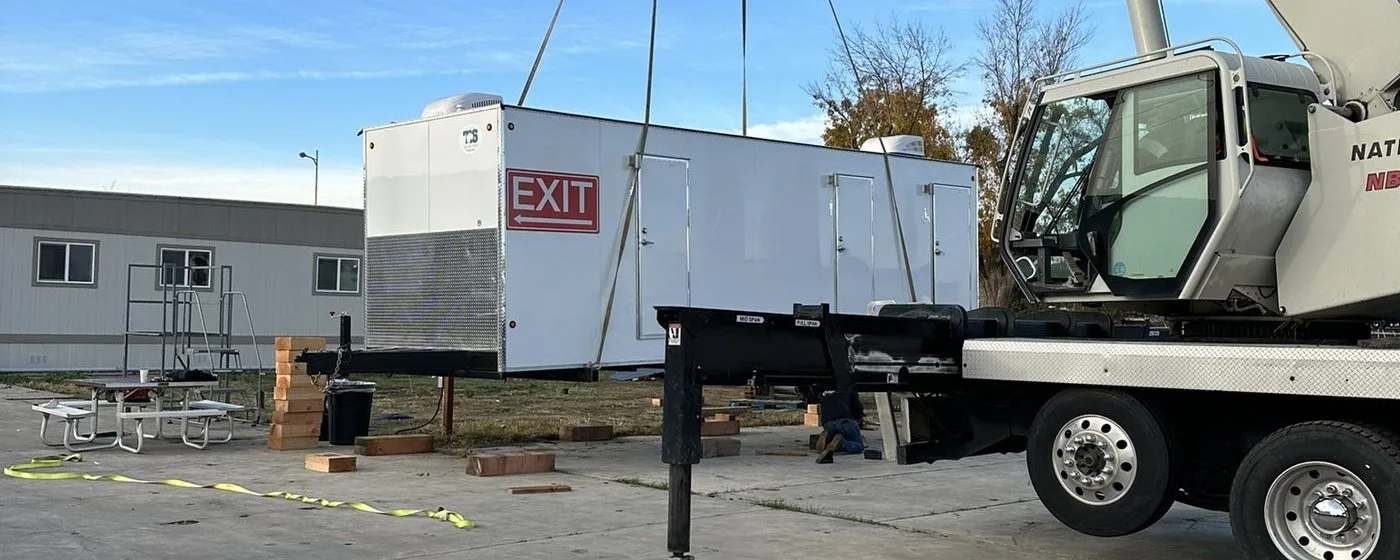
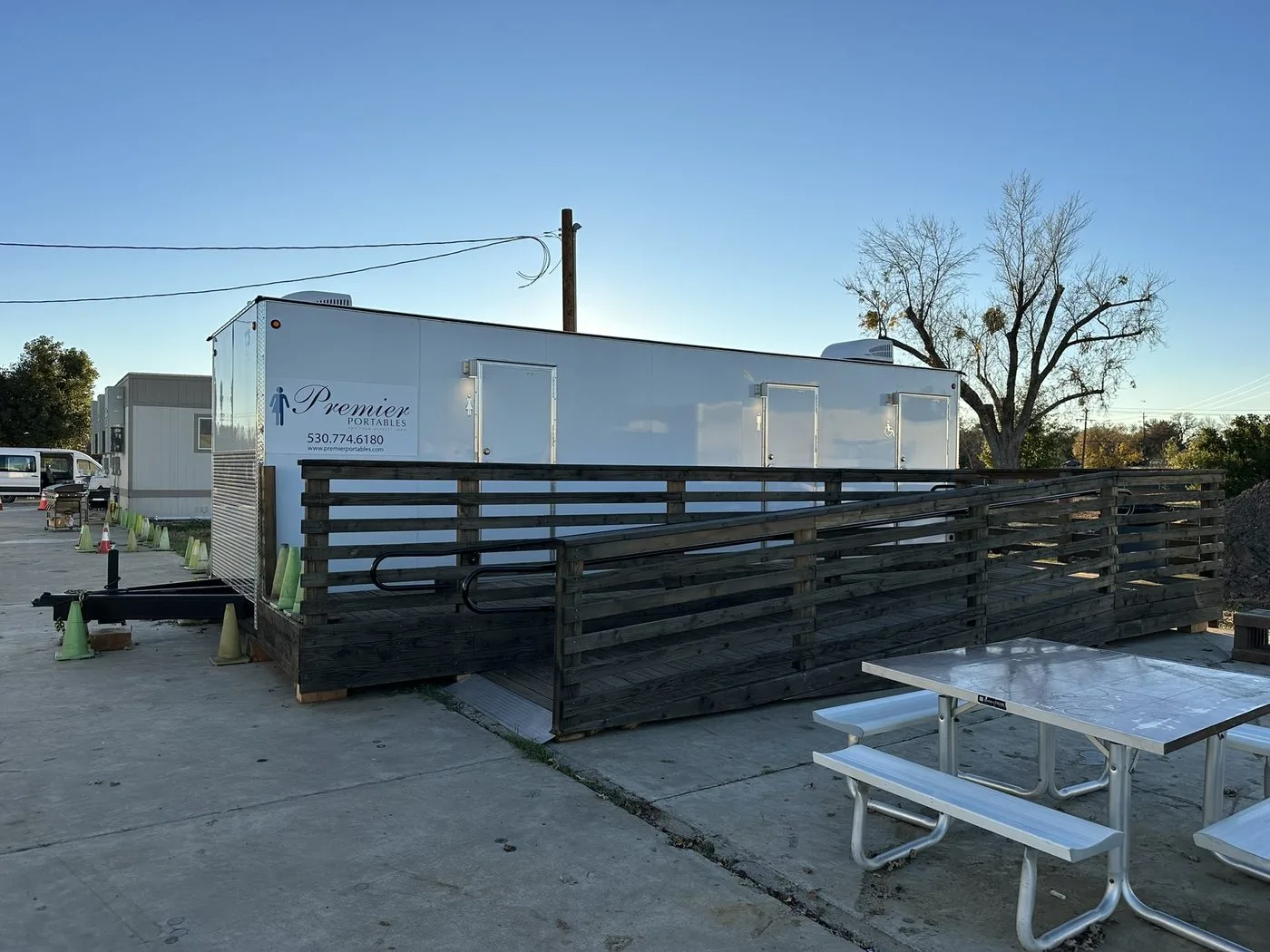
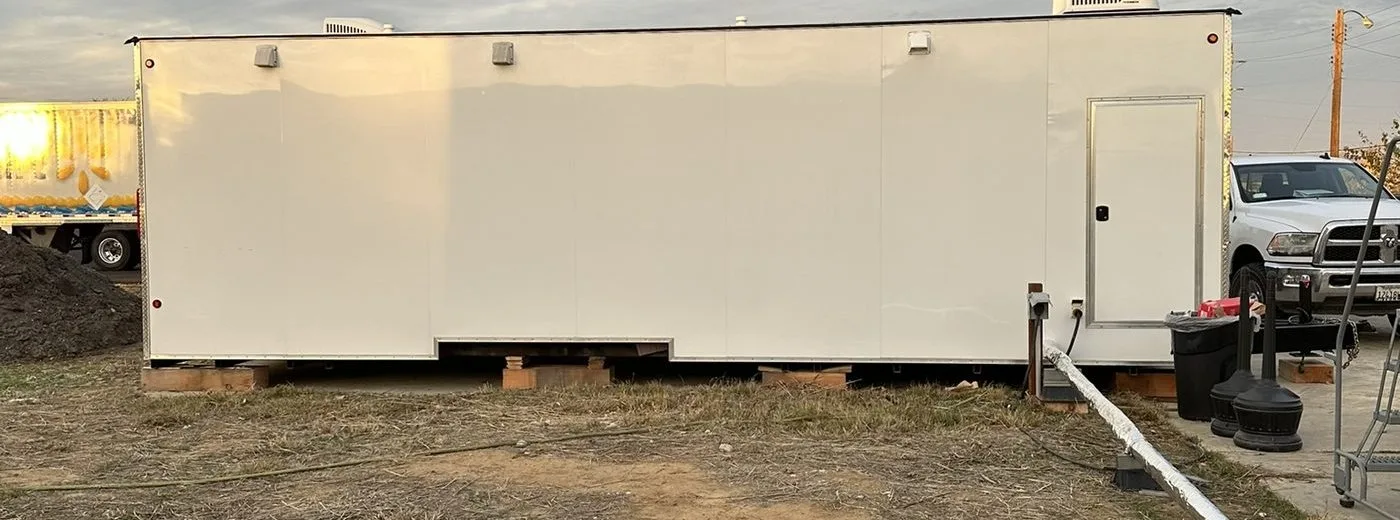
This wasn't a single-event rental or a quick construction drop. It was a multi-year, multi-phase operational relationship built on one thing: showing up exactly as promised, every time, regardless of what that required. When issues arose — and on a project of this scale, they do — every one was resolved within 24 hours.
That's the standard we hold ourselves to on every project in the Sacramento region and across Northern California, whether it's one trailer for one month or eight trailers for eighteen.
Yes. On large commercial projects we've deployed up to eight trailers simultaneously, including a mix of restroom and shower units across different utility configurations. We coordinate sourcing, placement, and daily service across all units — you deal with us, we handle the logistics.
Yes. When a project requires it, we provide daily on-site service — pumping, freshwater refilling, generator fueling, cleaning, and restocking. On one phase of this project we serviced two trailers every single day for 90 consecutive days without missing a visit.
Standard restroom trailers aren't designed for it. They use RV-style toilets that deposit waste into a single large holding tank underneath — there's no significant water push with each flush to move waste through a drain line the way a residential toilet does. Pumping works because a pump truck creates suction to evacuate the tank. Gravity-draining into a septic system is technically possible but requires someone on site to manually flush the tank with a hose — labor-intensive and unreliable compared to a pump-out.
The unit at the Fleet Development Program site is a different class of equipment entirely — specifically engineered for permanent installation with standard flush toilets and no holding tank, built from the ground up to drain directly into septic. That's not a modification or workaround. It's the right tool for a permanent application.
Yes. We've serviced active facilities running three shifts around the clock. The service schedule is built around the site's needs — not a standard business-hours window.
We source additional units through our network of trusted partners. Every trailer that goes on a client's site meets our standards regardless of who owns it.
Typically the client. Pumping, maintenance, and service calls are our responsibility — daily cleaning and restocking is generally handled by whoever is managing the facility. That keeps costs straightforward and gives the client control over their own facility standards. For projects requiring full-service daily support including cleaning and restocking, that can be contracted separately.
RV-style toilets in restroom trailers don't have the same water volume per flush as a residential toilet, so they require different handling when clogged. We include a clearing rod at every toilet — users push contents straight down into the holding tank. We also provide written instructions inside each unit on proper use and how to clear a clog. It's a simple fix when you know what to do, and making sure every user knows is part of how we prevent unnecessary service calls on long-term deployments.
| Phase | Duration | Trailers | Service Level |
|---|---|---|---|
| Distribution Center Expansion | 18 months | 8 at peak (3, 5, 7, three 8-station + shower) | Daily pumping; mixed power & water configurations |
| Expansion Phase 2 | 90 days | 2 (8-station + 3-station) | Full daily service: generator, water, cleaning & stocking |
| Fleet Development Program (CDL Training) | 3+ years (ongoing) | 1 large-capacity unit | Permanent hookup (septic, power, water); crane-placed |
Multi-phase, multi-trailer, full-service daily support — we've done it. If your Sacramento-area project is more complex than a standard rental, that's exactly where we're most useful. Call Ron directly.
916-538-9044